
The White House is pushing back on a long-running lawsuit over its disability accommodations by challenging the right of people with disabilities to sue the federal government.
Last year, a federal judge ordered the White House to reinstate sign language interpreters at many press briefings. The order came after the National Association of the Deaf and two deaf individuals sued arguing that a lack of interpreters violates Section 504 of the Rehabilitation Act of 1973, a law barring disability discrimination in federally funded programs.
Now, the Trump administration is appealing the ruling, but their argument in the case could have implications extending far beyond the presence of interpreters.
Advertisement – Continue Reading Below
In court filings, attorneys with the Department of Justice now claim that people with disabilities don’t have the right to sue federal agencies under Section 504.
“The Rehabilitation Act’s text, structure, and history make clear that Section 504 — even assuming it provides for an individual right — does not provide a private right of action against federal agencies in their programmatic capacities,” Justice Department attorneys wrote in their appeal to the U.S. Court of Appeals for the District of Columbia.
Instead, the Trump administration contends that people with disabilities who believe they have been discriminated against can make claims under the Administrative Procedures Act.
Disability advocates say this argument is out of step with Supreme Court precedent and that the federal government itself has frequently made the opposite argument in previous court cases.
“They’re arguing in a nutshell that there is no private right of action, that there is no right for an individual to go before the court and say my rights have been violated under Section 504,” said Amy Robertson, an attorney who filed an amicus brief in the case on behalf of nine disability advocacy groups. “It really would mean it would be more difficult to challenge discrimination by any federal agencies.”
In practice, this could affect people with disabilities facing a whole host of issues with the federal government ranging from discrimination when interacting with the Transportation Security Administration at the airport or struggling to obtain accessible materials from the Social Security Administration, Robertson said.
“For more than four decades, disabled people have relied on the private right of action under Section 504 to hold the federal government accountable when it discriminates — in national parks, veterans’ hospitals, federal prisons, and the halls of power. Those gains were not won through agency self-policing. They were won by disabled people going to court,” the disability groups’ amicus brief states. “A ruling eliminating that right as to executive agencies would close the courthouse door to the many millions of disabled people who participate in federal programs, at precisely the moment when federal enforcement of disability rights is most uncertain.”
The groups behind the amicus brief include the Disability Rights Education and Defense Fund, the American Association of People with Disabilities, the Autistic Women & Nonbinary Network, CommunicationFIRST, Disability Law United, Disability Rights Bar Association, Justice in Aging, the National Federation of the Blind and Paralyzed Veterans of America.
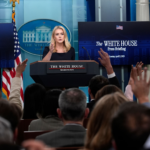
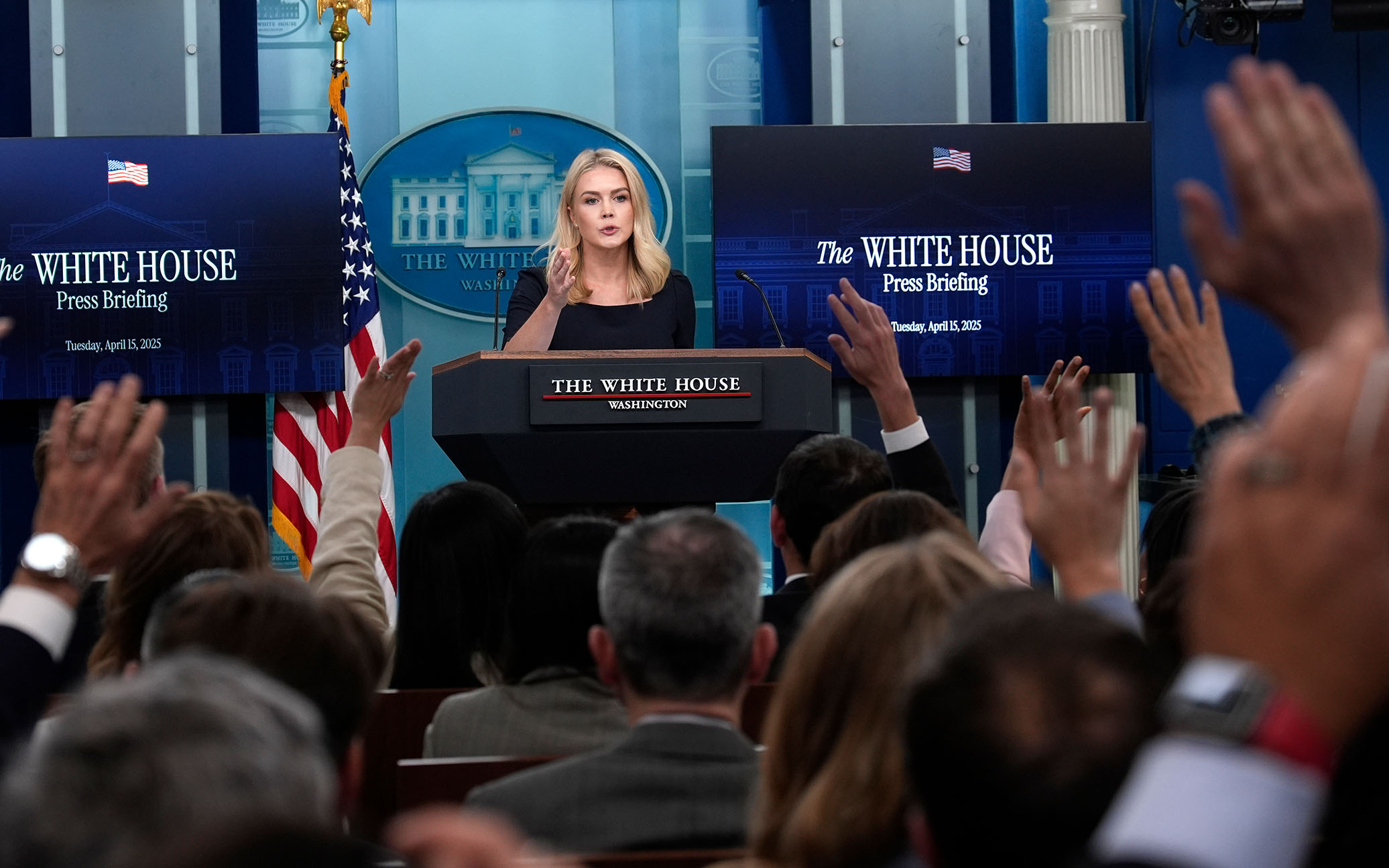
The National Association for the Deaf lawsuit originated last year when the White House abruptly stopped including American Sign Language interpreters at briefings after President Donald Trump took office.
The group says that ASL is distinct from English with its own grammar and structure and closed captioning is inadequate for many ASL speakers. The Trump administration has said that captioning and transcripts are sufficient and that requiring interpreters at White House events “would severely intrude on the President’s prerogative to control the image he presents to the public.”
Under a preliminary injunction issued in November, U.S. District Judge Amir H. Ali ordered the White House to provide a qualified ASL interpreter at all publicly announced press briefings conducted by Trump or White House Press Secretary Karoline Leavitt.
Following the judge’s order, the White House started including ASL interpreters at some events.
The White House did not respond to a request for comment about its latest claims and the Justice Department referred to its briefing in the case.
The matter is expected to go before a three-judge panel from the U.S. Court of Appeals for the District of Columbia, but it is unclear when that will occur.